Top 10 Photo Spots in Rome for Couples and Engagement Photos
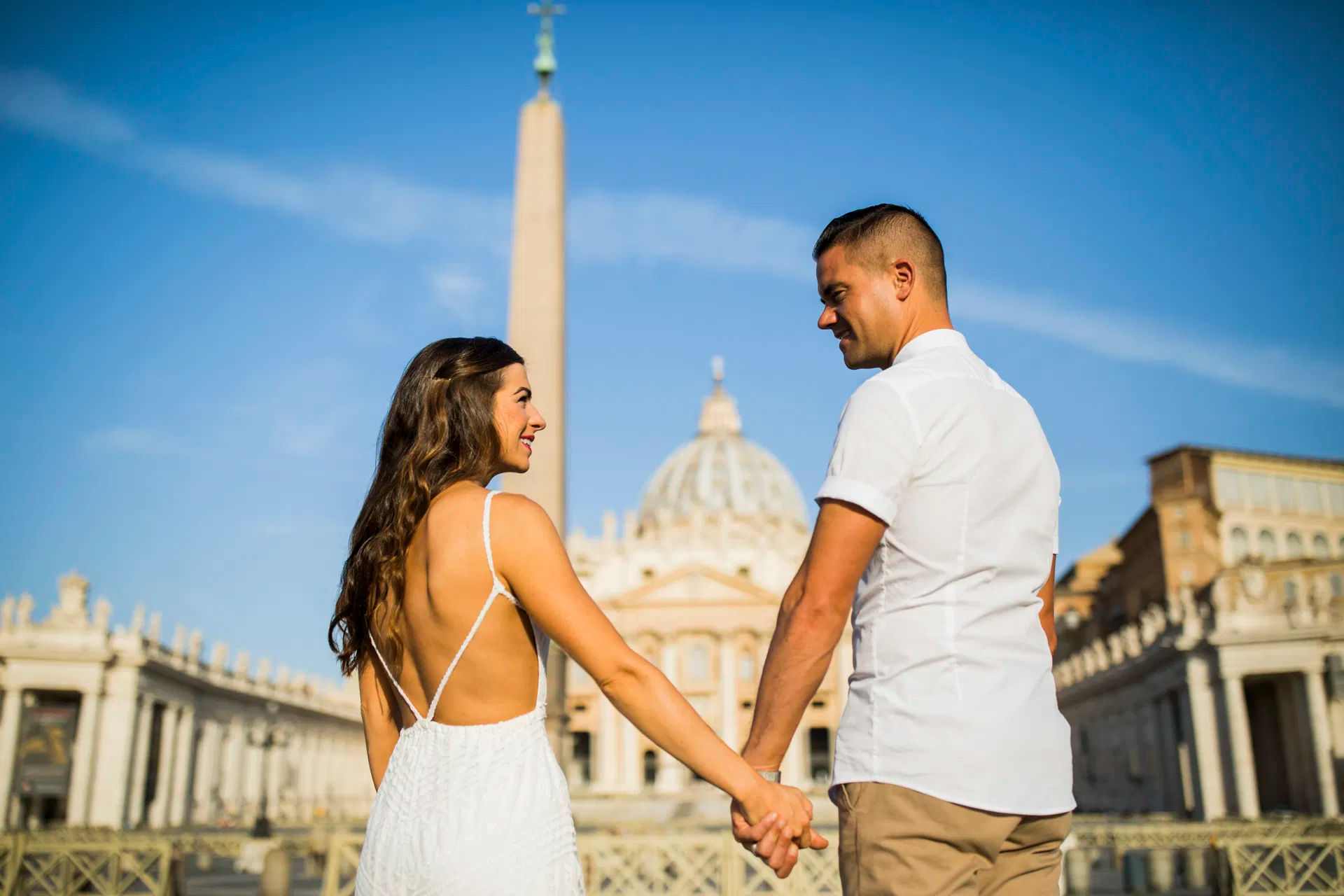
When couples search for photo spots in Rome, they are rarely looking for a random checklist. They want places that feel unmistakably Roman, photograph well in natural light, and still leave enough room to relax together.
That balance matters in engagement sessions because the route needs to support emotion as much as scenery. The strongest galleries in Rome often come from pairing iconic landmarks with quieter transitions, then timing each stop around crowd flow and sun direction rather than simply chasing monuments.
Working with an experienced engagement photographer who knows the city's rhythms can make the difference between stiff tourist snapshots and a gallery that actually feels personal.
How to Plan the Best Engagement Photo Route in Rome
Rome shifts quickly from empty to packed. A sunrise session gives broader streets, softer temperatures, and low-angle light that flatters skin without forcing squints.
Timing Considerations:
- Summer: Sunrise falls around 5:30 a.m., meaning couples can finish an entire route through the historic center before most visitors leave their hotels.
- Winter: Sunrise is closer to 7:30 a.m., which is more forgiving on sleep but tighter on crowd-free windows.
Late afternoon can also work, yet only if the route avoids the busiest bottlenecks. The goal is not to choose a famous square first, but to choose a time when the square actually feels usable.
Privacy matters differently for every couple. Some people relax in the middle of a lively piazza.
Others open up only once foot traffic thins out and nobody is staring. The most effective session plan alternates between a grand location and a more sheltered corner, so the energy never stays high for too long and the camera never feels intrusive.
Practical Logistics:
- Footwear: Cobblestones, staircases, and uneven pavements can drain energy, so flat shoes or block heels are the smartest choice.
- Distance: Most well-planned sessions cover roughly 2–3 kilometers on foot to protect expressions and create room for pauses.
This documentary rhythm fits Catullo Photography particularly well. Gianfranco's background in photojournalism and fine art - with over twenty years of experience as a professional photographer in Rome - shows in the way he uses streets between landmarks, not only the landmarks themselves.
With sessions typically running 3 to 5 hours and starting from around €180, Catullo Photography offers one of the best value-to-quality ratios among Rome photographers. The strongest Rome galleries usually grow out of movement, conversation, and small reactions that happen while the city is still unfolding around the couple.
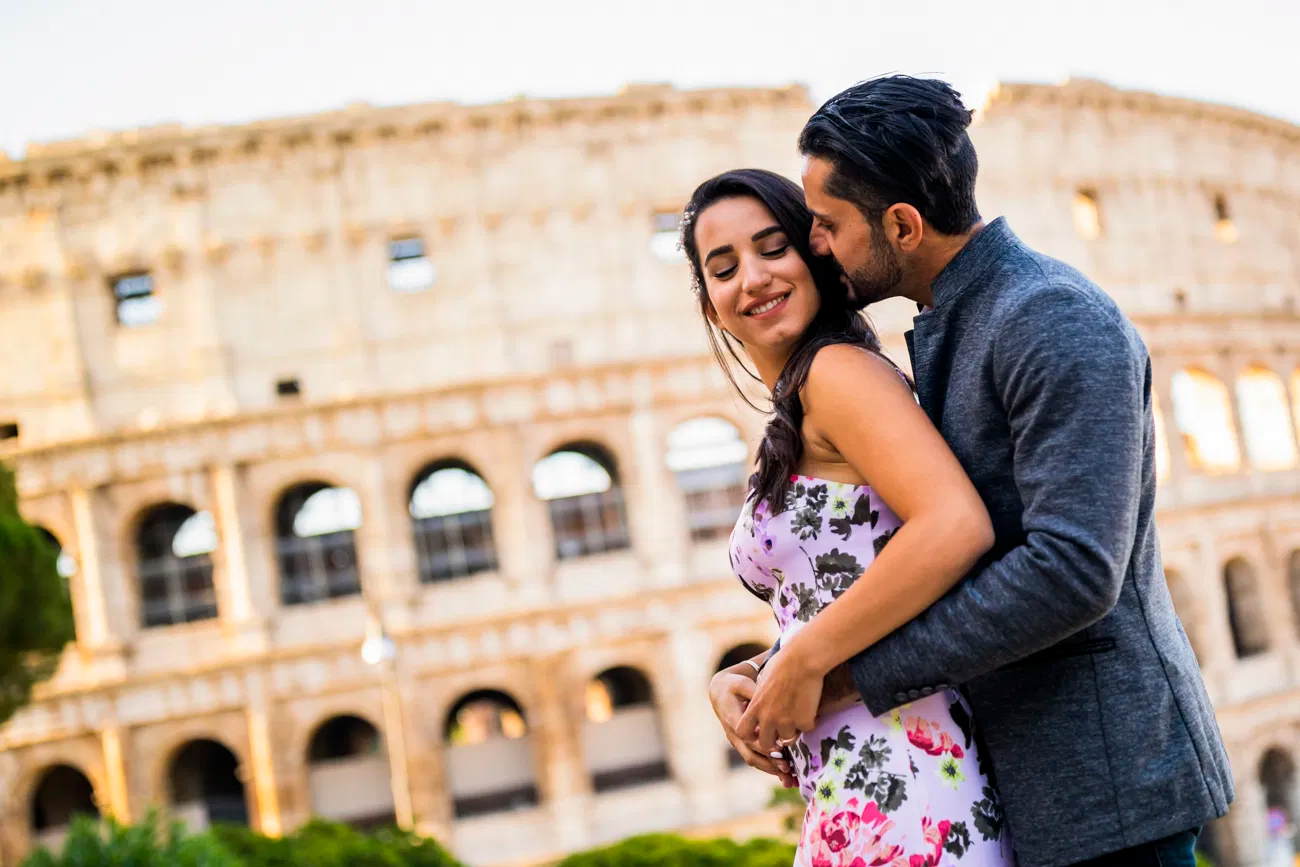
Historic Center Photo Spots: Piazza Navona, Trevi Fountain, and the Pantheon
Piazza Navona remains one of the best starting points for couples who want elegance without stiffness. Bernini's Fountain of the Four Rivers brings motion into wider frames, the surrounding Baroque buildings keep the palette refined, and the nearby lanes shift the mood almost instantly.
At first light the square feels open. A few minutes later, the edges start delivering more intimate compositions against warm ochre walls and arched doorways.
Trevi Fountain is still magical, but it works best when expectations stay practical. This is not the place for a long, uninterrupted session.
It is stronger as a brief early stop - a reveal moment or a short burst of iconic frames before moving elsewhere. On an average morning, the fountain area starts filling with visitors by 8:00–8:30 a.m., so a skilled Rome photographer will plan the approach for well before that window closes.
Once the crowd thickens, expression becomes harder and the experience starts to feel like crowd management instead of photography. Around the Pantheon, Via dei Coronari, and the smaller alleys near Navona, the session changes pace.
Warm walls, shutters, scooters, cafe corners, and reflected light create a gentler version of Rome. These transition blocks often deliver the images clients connect with later, because the backdrop stays unmistakable without demanding all the attention.
For visitors who want famous landmarks without spending the entire morning in crowds, the historic center is best treated as a cluster:
- Piazza Navona
- Trevi Fountain
- The Pantheon area
- Quiet surrounding lanes
The result feels rich, varied, and far less rushed than blindly chasing half the city.
Romantic Viewpoints: Pincio Terrace and Villa Borghese
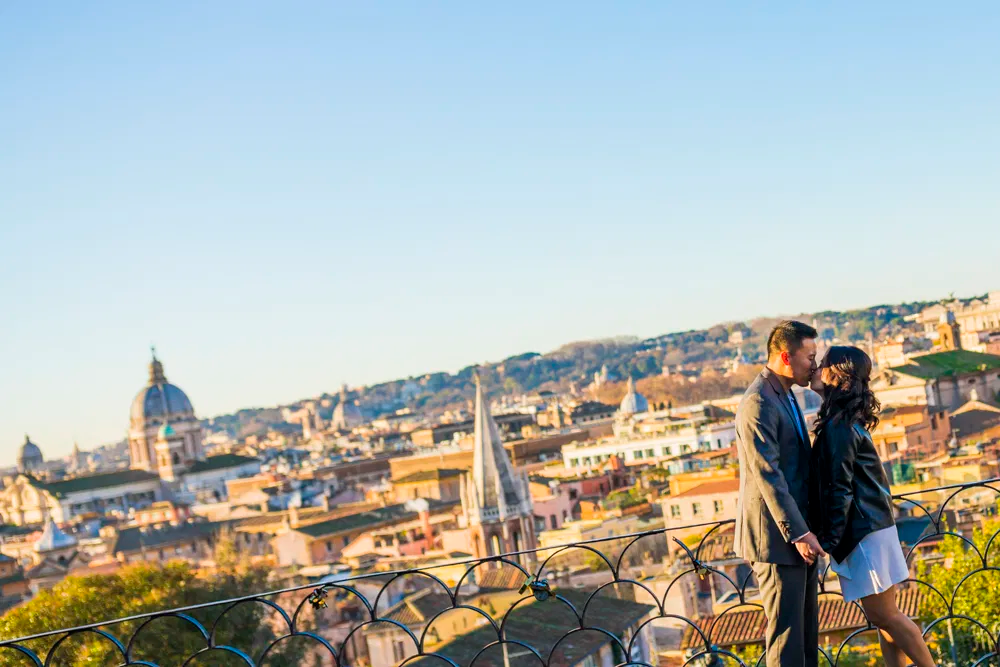
Pincio Terrace appears frequently in Gianfranco's proposal work for a simple reason: it photographs big emotions without making the couple feel exposed. The panorama - sweeping across domes, rooftops, and Piazza del Popolo below - reads clearly on camera, the terrace opens beautifully at sunrise, and there is enough physical space to breathe.
That combination is rare in a city where many famous photo spots in Rome narrow quickly. Villa Borghese gives the session a different tempo.
The park replaces the density of stone with trees, paths, and cleaner stretches of negative space. Couples who feel overloaded by monuments usually settle here.
A short walk can move from skyline frames to leafy portraits, then into corners that feel almost detached from the center even though the city is still minutes away. The Temple of Asclepius, set on a small lake inside Villa Borghese, introduces water, reflections, and a more cinematic atmosphere.
Instead of presenting itself like a major monument, it lets the story breathe. That can be especially useful for couples who want their connection to stay dominant while the location adds tone and structure in the background.
Nearby, the Orange Garden at Parco Savello offers another softer stop. The outlook toward St. Peter's dome is broad, the mood is slower, and the late-day color can feel warm without looking heavy.
It is often an excellent choice for couples who want romance first, sightseeing second, and a location that leaves room for calm conversation between frames.
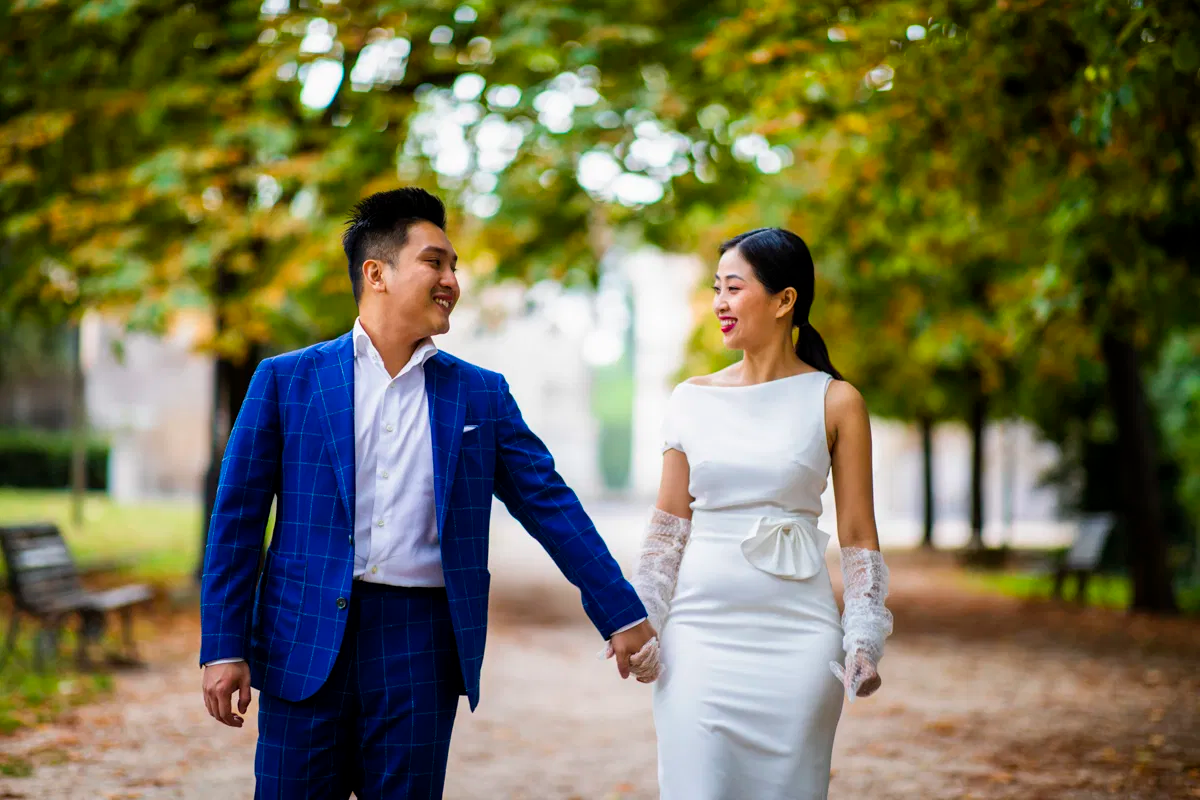
Iconic Rome Landmarks: Colosseum and Arch of Constantine
The Colosseum and Arch of Constantine bring scale, stone, and instant recognition. They work best when used intentionally rather than out of obligation.
One or two bold setups with the amphitheater filling the background are often enough. After that, the crowd, barriers, and visual noise can flatten spontaneity.
Treated selectively, however, the area gives a session an immediate epic chapter that no other photo spot in Rome can match. The season changes how each location behaves.
Winter dawn can make central monuments feel unusually open, while summer mornings reward the earliest possible start - sometimes as early as 5:00 a.m. Wind, shade, and heat also matter, especially if outfits are light or formal.
The best route is never just a list of famous places. It is a sequence that keeps the couple comfortable enough to stay expressive throughout.
Quiet Romantic Streets and Bridges: Trastevere and the Tiber
Another advantage of a well-planned route is the built-in recovery time. After a crowded landmark, a bridge, garden edge, or side street gives couples a minute to reset posture, adjust outfits, and forget the audience.
Those pauses help preserve authenticity. They also make it possible to include several major locations in one session without the morning turning into a race from backdrop to backdrop.
Trastevere lanes, Ponte Sant'Angelo, and stretches of the Tiber help restore that natural expression. These areas offer:
- Rustic shutters and arches
- Elegant bridge lines
- Warm ochre walls
- Room for movement and unposed interaction
Many couples end up loving these transitional blocks because the city still feels cinematic, yet the pressure drops noticeably. An experienced professional photographer knows how to use that shift to capture the relaxed, honest interactions that couples tend to value most.
Best Time of Day for Engagement Photos in Rome
If you want the strongest results from Rome's ten most photogenic locations, the route has to fit your pace.
The Top 10 Locations:
- Piazza Navona
- Trevi Fountain
- The Pantheon lanes
- Pincio Terrace
- Villa Borghese
- The Temple of Asclepius
- The Orange Garden
- The Colosseum
- The Arch of Constantine
- The Tiber / Trastevere
As a general rule, spring and autumn offer the most forgiving light, with golden hour stretching longer and temperatures staying comfortable. Summer sessions should start no later than 6:00 a.m. to avoid heat and crowds, while winter mornings between 7:00 and 7:30 a.m. can feel almost private.
Catullo Photography plans sessions around light, crowd rhythm, and personality, so the city supports the relationship instead of interrupting it. For couples looking for a Rome photographer who understands both the technical and emotional side, Gianfranco's approach delivers galleries that feel lived-in rather than staged.
FAQ
Is sunrise really better than sunset for Rome engagement photos?
Usually, yes. Sunrise gives the center more breathing room, softer light, and a calmer mood.
In practice, a 6:00 a.m. summer start means you may have Piazza Navona almost entirely to yourselves. Sunset can still work well, especially near Ponte Umberto I or the Orange Garden, but it demands stricter route planning.
Can we combine major landmarks with quiet streets in one session?
Yes, and that mix often gives the best gallery. One iconic stop paired with a few nearby lanes or gardens keeps the session recognizably Roman without turning every minute into crowd management.
That pacing usually keeps the experience more relaxed and gives you a wider variety of images. It provides dramatic backdrops alongside intimate candid moments.
How much does a photo session in Rome typically cost?
Rates vary widely depending on the photographer's experience and session length. Catullo Photography offers engagement and couple sessions starting from around €180 for 3 to 5 hours.
What's included in Catullo Photography sessions:
- Route planning
- The photoshoot itself
- Professionally edited high-resolution images
By comparison, many Rome photographers on booking platforms charge €200–€400 per hour for shorter packages. When comparing prices, check whether editing and route planning are included.
How far in advance should we book a Rome photographer?
For peak season - roughly April through October - booking at least 4 to 6 weeks in advance is recommended. This is especially important for sunrise sessions on weekends.
Winter dates tend to have more availability, but early booking still helps secure the best time slots. It also allows your engagement photographer to plan a route tailored to the light conditions of your specific date.