Unique Proposal Ideas in Rome
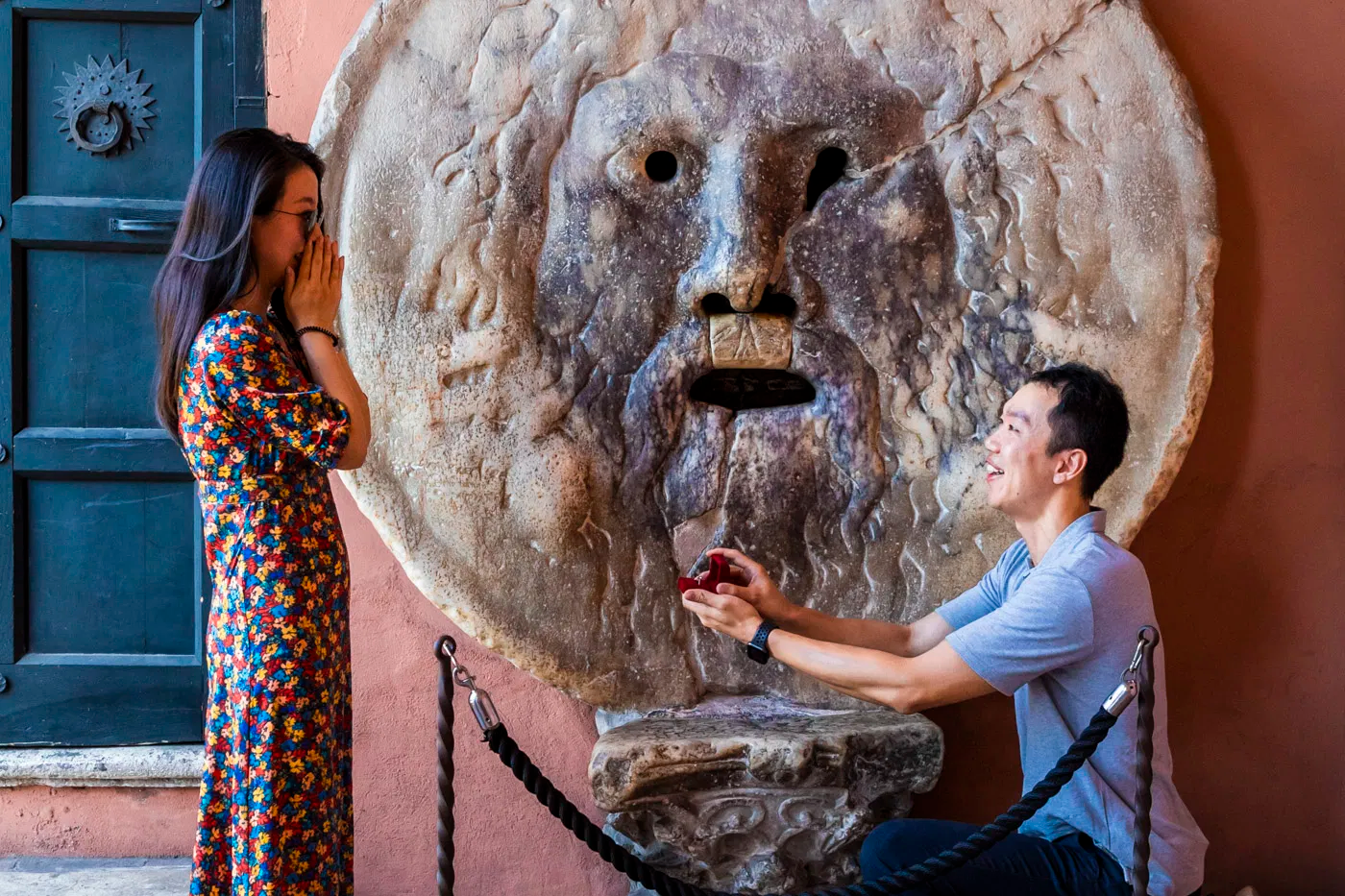
A proposal in Rome does not need elaborate props or a heavily staged script to feel memorable.
The best ones feel personal, easy to follow, and rooted in the way the couple already moves together.
Rome naturally helps, because every few streets the atmosphere changes from monumental to intimate.
That variety makes it possible to build a proposal around a walk, a ritual, a view, or a small private gesture, and let the city naturally turn it into something cinematic once the moment begins.
Whether you are planning a sunrise ask at a quiet terrace or a hidden reveal inside a travel habit, Rome gives you the backdrop — the rest should come from your own story.
Start with a Story You Would Enjoy Even Without the Ring Involved
A proposal becomes memorable when the plan would still feel like a beautiful hour together even if nobody knew what was coming.
That idea acts as a useful filter.
It keeps the concept from turning into a performance built only for photographs and brings it back to shared habits, humor, and your natural pace together.
Rome rewards that approach.
One route can begin with coffee at a corner bar, move through a quiet lane in Monti or Trastevere, then open into a wide terrace or fountain.
The proposal lands more naturally because the city is already providing transitions.
Instead of forcing a dramatic reveal, you let the atmosphere build in believable steps.
A typical morning espresso at a Roman bar costs about €1–€1.50 at the counter, so even the opening beat of your plan can feel effortless and authentic.
This is also where a documentary-style proposal photographer helps.
A photographer can blend into public space, follow movement instead of interrupting it, and capture the shift from ordinary conversation to surprise.
That style suits couples who want the final gallery to feel like something they lived, not something they acted out.
Working with a professional engagement photographer also means someone is scouting light, timing, and crowd density ahead of the moment — details that make a real difference when the plan unfolds in a busy city.
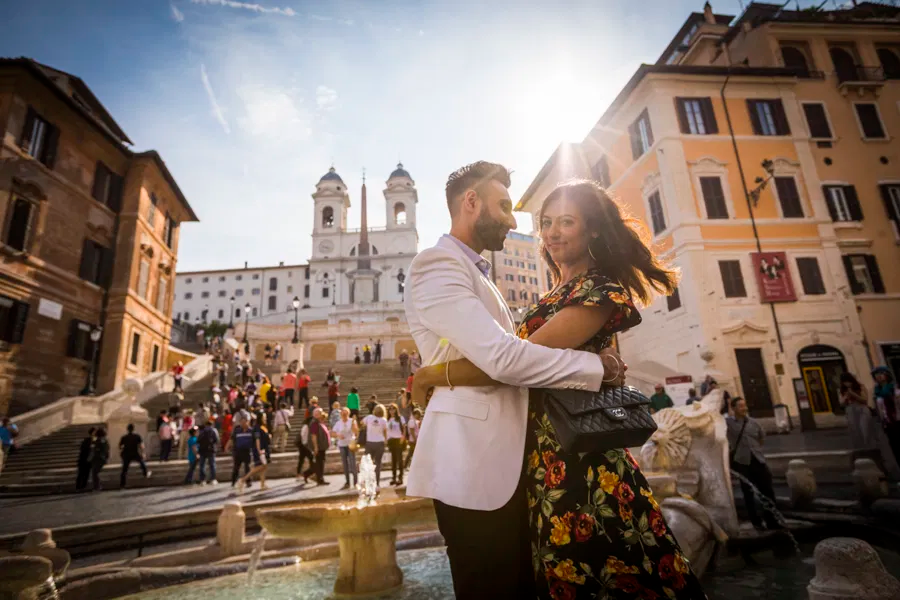
Idea 1 – Sunrise Espresso Walk to Pincio Terrace
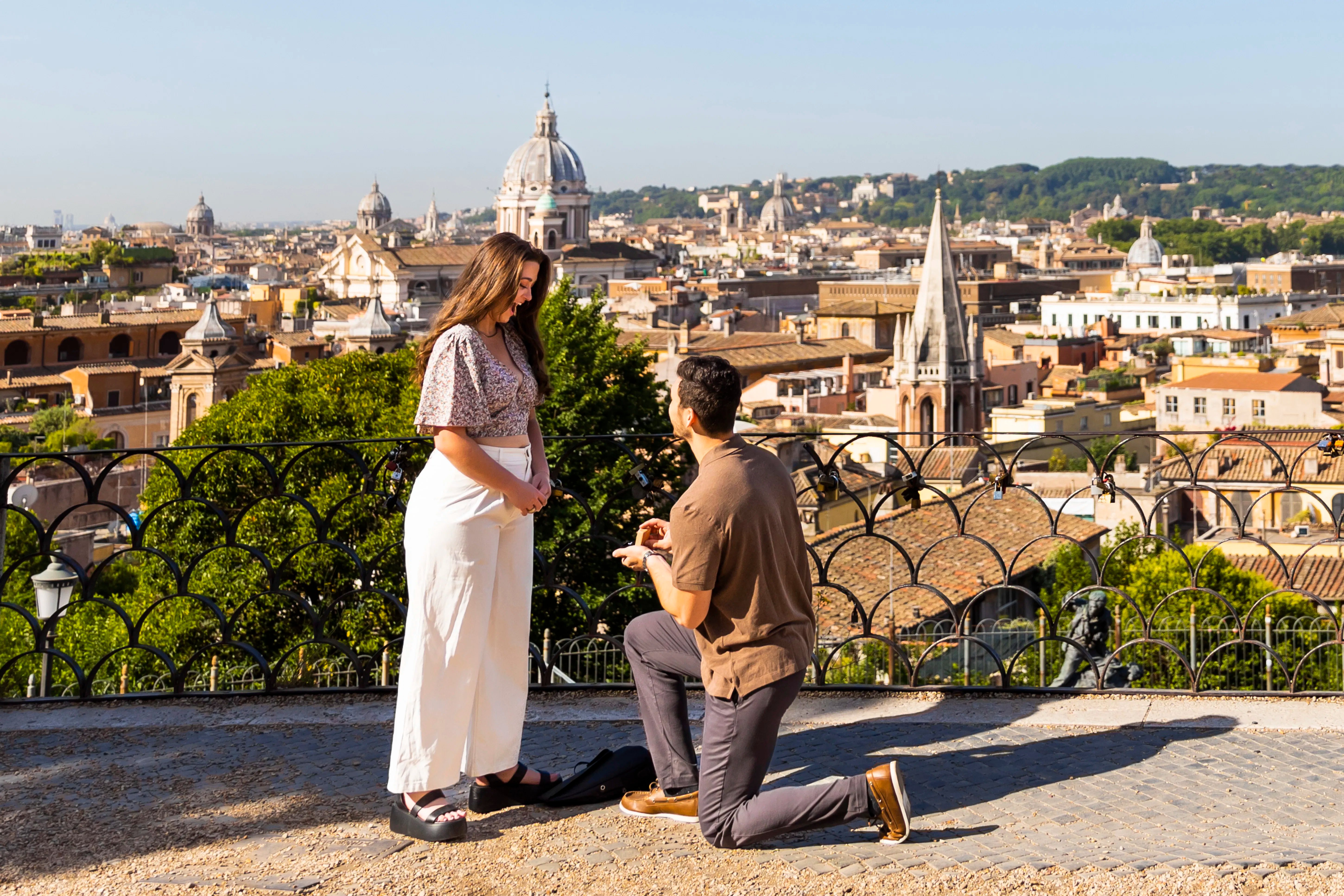
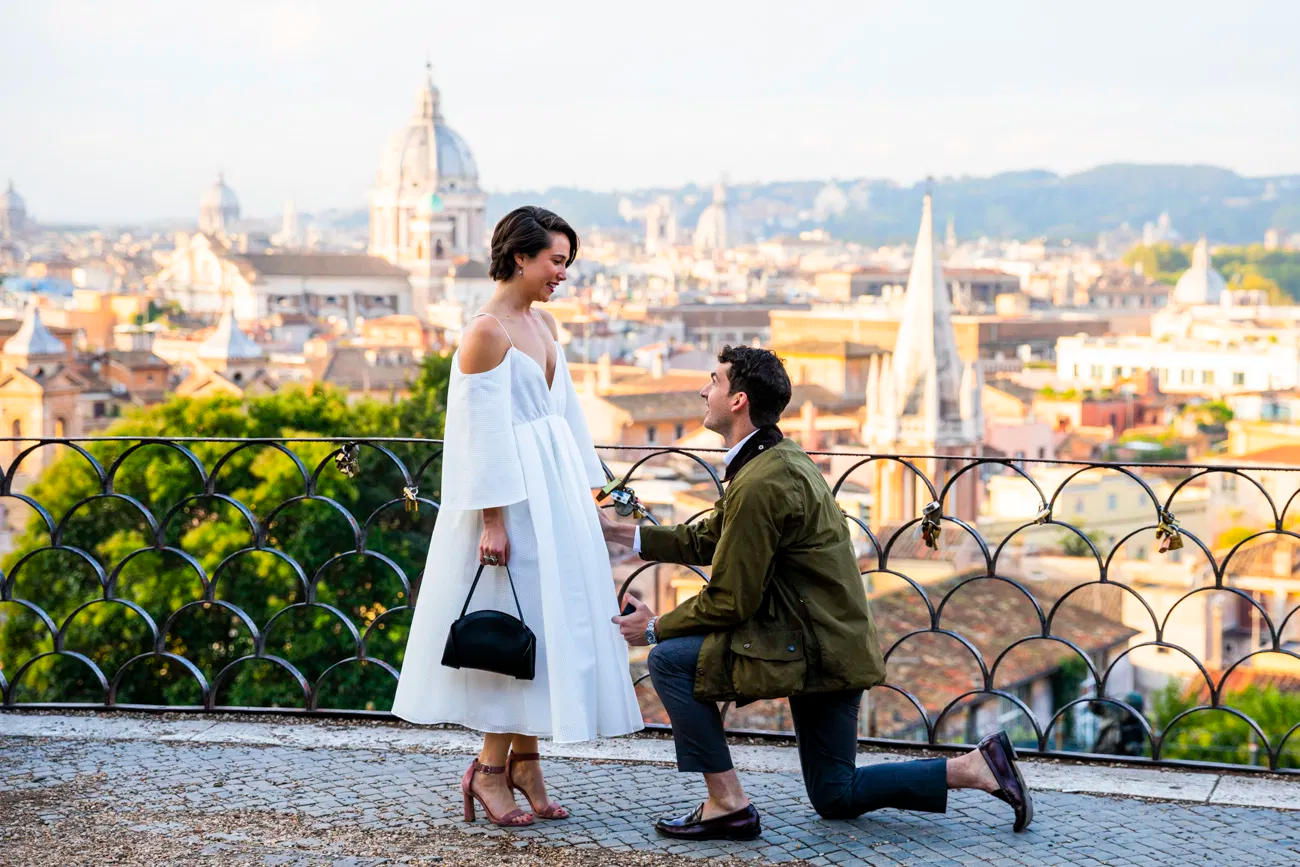
One of the simplest ideas starts with an espresso or cornetto in the city center, then a walk up toward Pincio Terrace as Rome wakes.
Nothing about it feels suspicious.
By the time the skyline opens up — with the dome of St. Peter's glowing in the distance — the light is soft, the streets are still quiet, and the proposal naturally arrives within a calm rhythm rather than at the end of a hectic dash.
Pincio is free to visit at any hour, and in spring or summer, sunrise hits the terrace around 6:00–6:30 AM, meaning you will often have it nearly to yourselves.
This location is one of the most photographed proposal spots in Rome for a reason: the panoramic view, the warm golden light, and the open terrace give a proposal photographer plenty of room to work discreetly from a distance.
Idea 2 – Rowboat Proposal Near the Temple of Asclepius
A second concept uses the Temple of Asclepius in Villa Borghese for a more cinematic tone.
The lake, the bridge, and the rowboats create movement before the question even happens.
You can rent a rowboat at the small wooden boathouse beside the lake with the following conditions:
- Roughly €5 per person for a 20-minute session.
- The boats operate daily from about 9:30 AM until dusk.
- A minimum of two people is required.
For couples who like elegance without too much formality, that setting can feel playful and romantic at the same time.
The 18th-century neoclassical temple reflected on the calm water creates a visual frame that works beautifully in photographs, making it a favourite spot for any engagement photographer working in the area.
Both ideas work because the reveal grows out of movement.
Nobody is being marched toward a random spot on the pavement.
The couple is already doing something pleasant together, which keeps expressions open and reduces the strange tension that appears when a plan feels overly engineered.
Idea 3 – A Decoy Photo Walk
A decoy session is useful when one partner would immediately suspect a formal dinner or obvious setup.
You book a short portrait walk with a proposal photographer, frame it as a vacation keepsake, and let the proposal happen once nerves have settled.
Key locations for this approach include:
- Trevi Fountain at dawn — typically around 5:30–6:30 AM in summer, when the piazza is nearly empty.
- Piazza Navona in the first morning light.
A professional photographer in Rome who specialises in proposals will know exactly which angles stay clear of crowds and where the light falls best at each hour.
Idea 4 – A Handwritten Route Through Rome
Another option is a handwritten route with two or three clues that lead through streets the couple can actually enjoy.
A note, a favourite song lyric, or a small memory from the trip can guide the walk toward:
- Trastevere.
- Via dei Coronari.
- A bridge over the Tiber.
Each stop becomes part of the emotional buildup.
The point is not making the scavenger trail complex.
Keep it short and emotionally clear.
When the clues are simple, the partner follows the story rather than trying to solve a puzzle.
That preserves the surprise while still making the proposal feel designed specifically for your relationship.
A strong cover story keeps this kind of idea believable.
If the walk, snack stop, or portrait session already sounds like something you would naturally do together, the proposal can stay hidden until the exact second you want the tone to change.
This concept also works well for people who worry they might forget what they wanted to say in the moment — having a written trail gives structure without pressure.
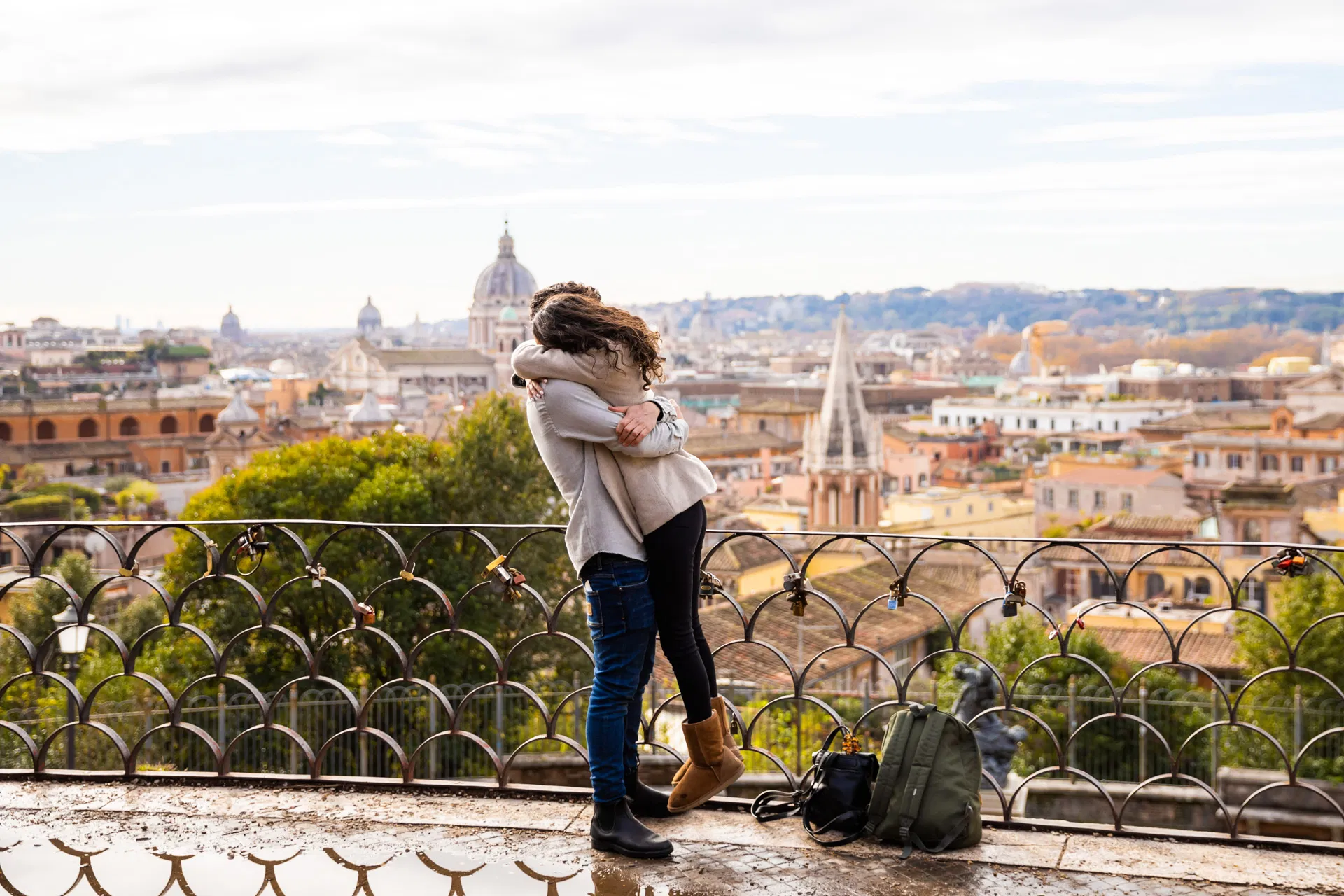
Idea 5 – A Voice Note or Letter in the Orange Garden
Some couples are not drawn to spectacle at all.
For them, a quiet letter read aloud in the Giardino degli Aranci (Orange Garden) on the Aventine Hill can be far more powerful than a public kneel beside a fountain.
The garden is free to enter, usually peaceful in the morning, and offers one of Rome's most romantic views — a perfectly framed panorama of St. Peter's dome through a canopy of bitter orange trees.
The setting gives the idea room, a gentle pace, and a view that feels romantic without demanding constant attention.
A variation replaces the paper with a phone voice note.
The partner listens on headphones, hears a short personal message, then turns to find the ring.
That sequence is intimate, easy to stage, and surprisingly photogenic because the reaction unfolds in layers instead of one instant.
A proposal photographer positioned nearby can capture the listening, the realisation, and the embrace as three distinct emotional beats — the kind of sequence that makes a gallery feel like a short film.
Idea 6 – Hide the Ring Inside a Camera, Book, or Travel Ritual
Rome attracts couples who already travel with small rituals: film cameras, sketchbooks, journals, guidebooks, or a favourite morning walk.
Those habits can carry the proposal.
A ring hidden inside a camera pouch, between pages of a notebook, or inside a small photo book can turn a familiar gesture into the reveal.
This works especially well near the Colosseum or along quieter stretches near Castel Sant'Angelo, where the setting already feels historic and full of story.
The city does not have to do the whole job.
It simply frames an action that already belongs to the couple, which is what makes the idea feel personal instead of borrowed.
The key is subtlety.
The object should look natural in your hands, and the reveal should happen in one clean motion.
If too many props appear, the scene starts working against itself.
One meaningful object is enough to anchor the memory and give the gallery a distinctive narrative thread.
Idea 7 – Let the Proposal Continue Into a Moving After-Story
Many people plan the question but forget the next ten minutes.
One of the most cinematic approaches is to design a short after-story intentionally:
- A riverside walk along the Lungotevere.
- A bridge crossing at Ponte Sisto.
- A quick stop for sparkling wine at a nearby enoteca.
- A gentle loop through cobblestoned side streets.
A glass of prosecco at a Roman wine bar typically costs €5–€8, and that simple pause can give the moment room to breathe.
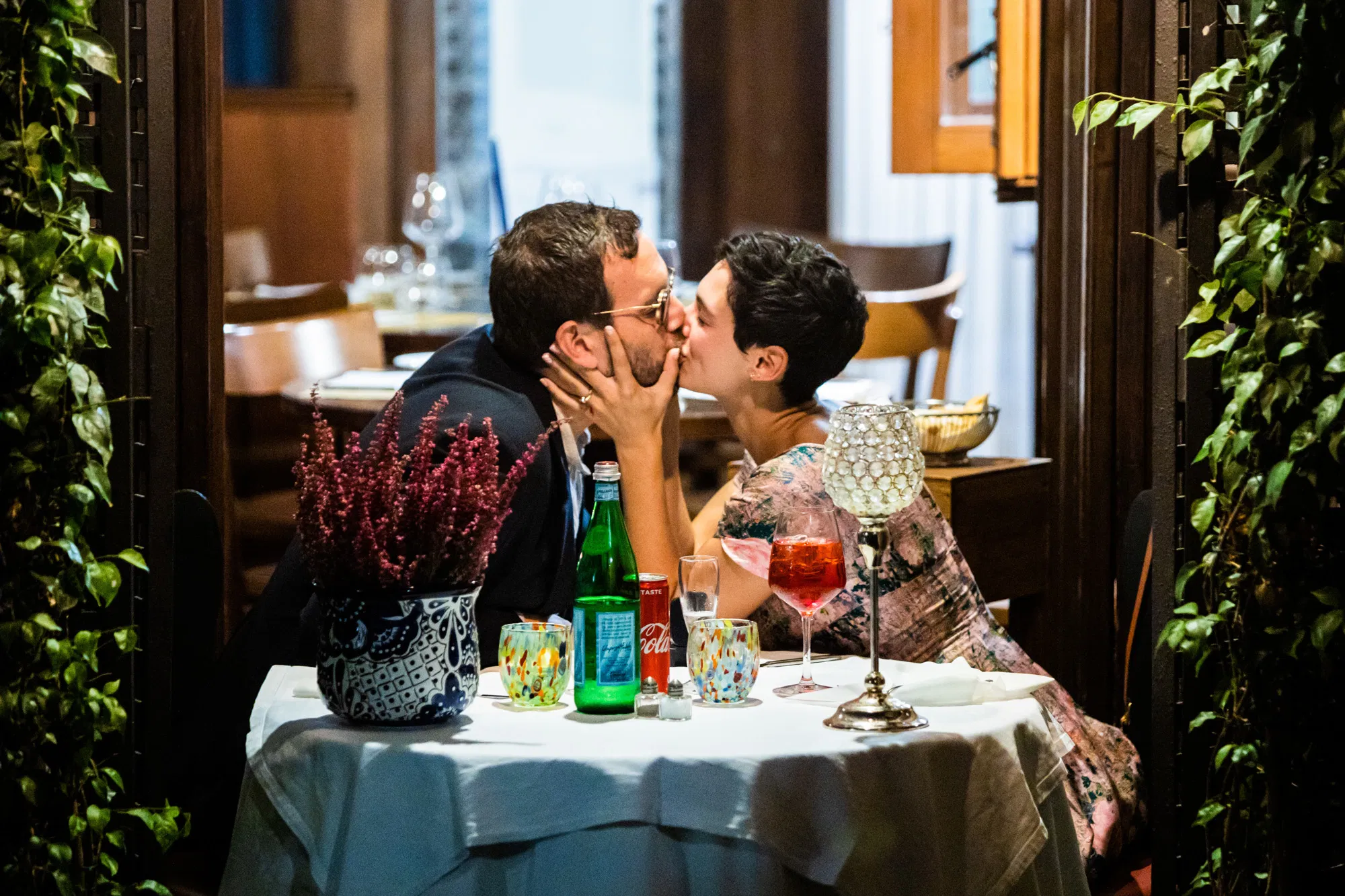
Once the yes has happened, the gallery keeps growing instead of stopping.
That continuation is especially useful in Rome because the best reactions often unfold after the first shock.
Laughter arrives, details get noticed, and the couple starts talking freely again.
Those frames can feel even stronger than the kneel itself because they show the memory settling into the body in real time.
An experienced engagement photographer knows to keep shooting through this phase rather than stopping at the initial reaction.
Choosing the Right Proposal Photographer in Rome
The photographer you choose shapes the entire feel of your gallery.
A proposal photographer with documentary experience will follow the moment rather than stage it, which is why the resulting images tend to look candid, warm, and emotionally honest.
When evaluating a photographer in Rome, look at the following:
- Full proposal galleries — not just highlight reels.
- Transitions between the question, the reaction, and the after-moments.
- Pricing (typically ranges from €300 to €600 or more for a one- to two-hour session).
Catullo Photography offers personalised planning as part of the process, including location scouting, timing advice, and a believable cover story.
For availability and pricing, contact Gianfranco directly at info@gianfrancocatullo.com or call +39 335 470 002.
Planning Tips from a Proposal Photographer in Rome
If you want proposal ideas in Rome that feel elegant rather than gimmicky, build them around your own habits, then let Catullo Photography shape the route, timing, and coverage.
Consider these factors for the best result:
- Timing: Early morning sessions — before 8:00 AM — tend to give you the best combination of light and privacy.
- Seasons: Spring (March to May) and autumn (September to November) offer the most comfortable temperatures and softest light.
- Backup: Always have a rain backup like a covered loggia, a portico, or a café with a good view.
The city already supplies beauty.
The right plan simply turns that beauty into a proposal that looks like you.
FAQ
Do unique proposal ideas need props to feel special?
No.
A clear route, the right hour, and one meaningful detail usually do more than a pile of decorations.
Specificity matters.
Too much complexity often makes the moment feel less personal, not more.
The most photogenic proposals tend to be the simplest, because a proposal photographer can focus on genuine expressions rather than managing a scene full of objects.
How far in advance should I book a proposal photographer in Rome?
Book as early as you can, especially for spring and autumn travel.
Eight to twelve weeks in advance is ideal for a sought-after photographer in Rome, as peak season dates fill quickly.
That lead time gives enough room to compare locations, confirm light conditions, build a believable cover plan, and choose a weather backup if needed.
It also leaves space for timing adjustments if your travel schedule shifts.
What does an engagement photographer session cost in Rome?
Rates vary depending on experience, session length, and deliverables.
As a general guide, professional engagement photographer sessions in Rome start around €300 for a shorter session and can reach €600 or more for extended coverage.
Catullo Photography provides custom quotes based on your specific vision — reach out directly for current availability and pricing.


